Level 3 Diagnosis: Mastering System Analysis in High-Tech Projects
In high-tech industries, project managers face challenges that extend far beyond schedules and budgets. The most significant risks often lie within the system itself — in architecture, interfaces, compliance, and design maturity. These hidden risks rarely appear on the surface but can determine whether a project thrives or fails.
That’s where Level 3 Diagnosis (System Analysis) becomes essential. It’s a structured approach designed to uncover hidden system-level risks early, align teams, and prevent late-stage surprises that derail both timelines and budgets.
While Level 1 Diagnosis (scope, schedule, cost, quality) and Level 2 Diagnosis (project management knowledge areas) focus on core project parameters and discipline-specific challenges, Level 3 dives into the system’s technical foundations. It’s here that the project manager ensures design feasibility, integration readiness, and overall system resilience.
Project diagnosis is an analysis tool. Analysis can give us deep insight into the challenges downstream. Analysis gives us foresight. This foresight enables us to develop a strategy for system development. It helps us determine the development sequence. It also gives us the opportunity to facilitate concurrent engineering at reduced risk. This is essential for accelerated system/product development.
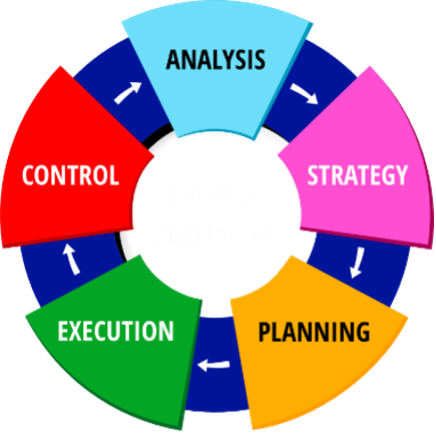
When performing diagnosis, the following should raise red flags:
Significantly new technology
High-performance criteria
New compliance standards
New CAE tools or versions
Unclear user requirements
Unclear verification or validation methods
Multi-disciplined engineering development streams
These situations generally require deeper analysis, smart prioritisation, and discipline to do the groundwork necessary before launching into the full-scale implementation.
In the project set-up phase there should always be the two critical questions which should be asked:
Is Level 3 Diagnosis necessary or beneficial?
If it is required, how much analysis is needed?
That exercise, in the more complex of scenarios may be a two-pass exercise:
High-level assessment, and if necessary
Mid-level assessment, which is more detailed
An issue here, is that under high stakeholder pressure, the tendency to just jump straight into actual mid-level development can persuade project managers to start too early. The consequences are all too often, budget and schedule overruns. Unexpected problems crop up during project execution, because problems or requirements were never anticipated nor foreseen.
Why Level 3 Diagnosis Matters
High-tech projects are rarely straightforward. They involve:
Multi-disciplinary teams spread across geographies
Complex systems of subsystems that must integrate seamlessly
Fast innovation cycles paired with demanding quality standards
Regulatory and compliance requirements that cannot be ignored
When system analysis is overlooked, small cracks become fault lines. A missed interface definition might lead to costly redesigns. Unclear architecture can cause misaligned assumptions across teams. Insufficient test planning can result in late-stage failures during integration.
Level 3 Diagnosis ensures these risks are not left to chance. It equips project managers with a systematic way to ask the right questions, challenge assumptions, and design strategies that anticipate problems before they escalate.
The Six Critical Focus Areas in Level 3 Diagnosis
1. System Architecture Clarity
Question: Is the overall system architecture clearly defined, stable, and reviewed by all stakeholders?
Without architectural clarity, teams often work from mismatched assumptions. This leads to hidden complexity, poor downstream coordination, and wasted effort when subsystems don’t align. Reviewing and stabilising architecture early ensures that the project foundation is solid.
Application Example: In semiconductor projects, unclear architecture between chip design and firmware teams can lead to incompatible interfaces that cost months of rework. Early clarity avoids these risks.
2. Interface Definition & Integration
Question: Are major subsystem and external interfaces clearly documented and understood?
Interfaces are where most technical surprises hide. Ambiguity here often leads to rework, missed milestones, and costly delays when subsystems refuse to integrate smoothly.
Application Example: In automotive electronics, poorly defined interfaces between hardware and software can result in integration failures during testing, delaying vehicle launch. A Level 3 review surfaces these issues early.
3. Variant & Configuration Complexity
Question: Does the system need to support multiple versions, platforms, or market-specific features?
High variant complexity increases risk in requirements, testing, and verification — especially if not reflected early in design. Multiple configurations also require careful verification and validation, which teams often underestimate.
Application Example: A mobile device with global variants (US, EU, Asia) may introduce subtle but critical differences in power supply, frequency bands, or regulatory compliance. Identifying this complexity early prevents costly revalidation later.
4. Compliance & Safety Alignment
Question: Are compliance, certification, or safety-critical requirements part of the system?
If compliance is not built into the design from the start, teams risk missing regulatory gates, delaying launches, or facing costly redesigns. In safety-critical industries, late compliance alignment is not just costly — it can be catastrophic.
Application Example: In aerospace, failing to align design with DO-178C certification early can lead to flight approval delays measured in years. Level 3 ensures compliance is embedded, not an afterthought.
5. Engineering Maturity & Resources
Question: Are we building with well-understood technologies, and do we have the resources to execute?
Technical uncertainty or reliance on immature technologies can dramatically shift project timelines. Add to that the question of whether sufficient compute power, simulation tools, and test facilities exist — and you have a recipe for project risk if unaddressed.
Application Example: In large-scale system simulation, lacking enough compute licenses or memory capacity can stall verification efforts, leading to bottlenecks across the development chain. Early analysis allows for resource planning that matches technical ambition.
6. Failure Mode Analysis
Question: How might the system fail, and have we analysed it thoroughly?
Failure Mode and Effects Analysis (FMEA) and Design-for-Excellence (DfX) considerations — such as thermal dissipation, signal integrity, or algorithm lock-states — are essential to prevent late-stage design churn. Skipping this step often results in firefighting during integration.
Application Example: In electronics, neglecting thermal dissipation analysis early can result in overheating during testing, forcing expensive redesigns. A Level 3 diagnosis brings these risks into focus before they become critical.

Critical Focus Areas in System Design
Turning System Analysis into Competitive Advantage
Level 3 Diagnosis is not just about avoiding failure — it’s about building a stronger competitive position. Organisations that apply this discipline consistently:
Execute faster with fewer late-stage design changes
Reduce rework and lower overall costs
Increase confidence among stakeholders and regulators
Build resilience in their development processes
By systematically addressing system-level risks, project managers transform uncertainty into structured strategy. This not only prevents costly mistakes but also accelerates innovation by freeing teams from constant firefighting.
A Real-World Perspective
Consider a high-tech engineering company launching a new system-level product.
Without architectural clarity, assumptions between hardware and software teams conflict, causing integration delays.
Without compliance alignment, regulatory approval is missed, delaying launch by six months.
Without resource analysis, simulation tools become a bottleneck, slowing verification.
Each of these could sink the project. But with a Level 3 Diagnosis, the project manager anticipates them, puts mitigations in place, and ensures the system is designed for success.
This is the difference between reactive firefighting and proactive leadership.
Key Takeaway
Level 3 Diagnosis equips project managers to:
Spot hidden system risks early
Align architecture, compliance, and resources with strategy
Deliver complex projects with greater efficiency and confidence
In today’s high-tech environment, where complexity and innovation collide, system-level analysis is no longer optional — it’s essential for success.