New Frontiers in Advanced High-Tech Project Management Training
The Challenge
At Escape we now have over 80 project managers who are freelance professionals. Our project managers are qualified and generally have 10 to 30 years project management experience. Typically, project managers are contracted into large companies, taking over the leadership of complex engineering projects. Often, the projects are already running and are under intense schedule pressure.
We began to name the group as the “Parachute Club”, because project managers were typically parachuting into a complex and challenging situation. They all needed to hit the ground running and acclimatise to the client organisation and project situation very rapidly. Clients absolutely need high-performance high-tech project managers.
As a project manager trainer and freelancer, I had already accumulated 21 years of project management experience as a freelance project manager, trainer, coach and organisational consultant. I had accumulated a substantial amount of experience, parachuting into numerous companies across Western Europe in a number of high-tech sectors. The project situations were invariably strategic in nature and the pressure was always sky-high. I was well placed to help other Escape members with an advanced training programme. The question was what shape and form that training should take?
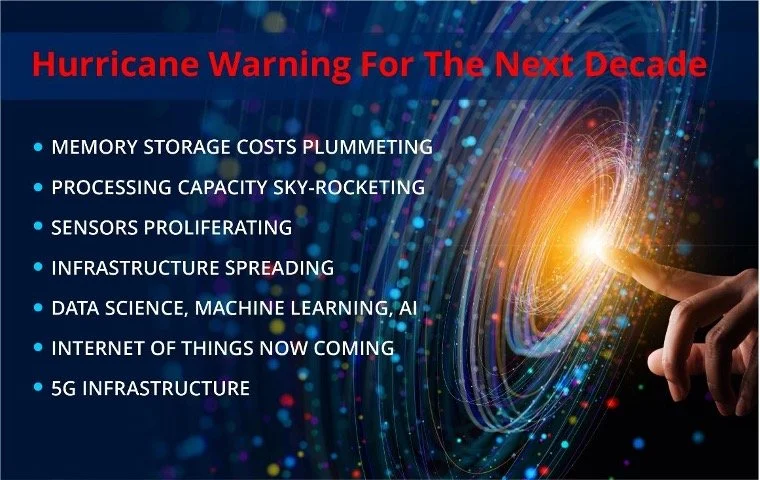
High-tech fields are advancing at terrific speeds. Convergence of technologies into new products is also happening at break-neck speeds. Success will favour high-tech companies who can develop at speed. Systems and products are becoming more complex, requiring a more applied approach, merging both product and project management methodologies.
The Advancement Space
I was very fortunate to learn a PMP equivalent course in an applied form in 1999. This was a 9-day in-company course in PMP applied to System-on-Chip development. This was indeed the integration of two methodologies – product development methodology and project management methodology, across the project lifecycle. It was incredibly effective.
When I started giving project management training in 2003 it was an applied form. It was the new niche of “high-tech project management”. However, this was at a PMP equivalent level, or essentially “Basic High-Tech Project Management”. Twenty years later, I switched the emphasis to “Advanced High-Tech Project Management”. It is the space above the PMP level and embraces PMI’s philosophy of continuous education in project management, beyond conventional training. Beyond the PMP level I have accumulated 25 years’ experience in Advanced High-Tech Project Management. That experience was picked up working in numerous companies, in several high-tech sectors and even in several countries. One can visualise this as a 25-year post-PMP learning curve.
When you go through such an intensive project experience, on a quest for ever faster and more streamlined development, you can experience well over 200 “light bulb” moments.

These light bulb moments are principles, tools, techniques and approaches, which are learned through project successes and failures. From another perspective they are personal lessons learned. The experiences can be picked up in numerous areas. For example:
Project management approaches
Product development approaches
Communications effectiveness
Design Failure Mode Effect Analysis
Validation and environmental testing
Modelling, simulation and CAE
Managing difficult people
Resolving conflict
Persuasion, influence and negotiation
Navigating organisational politics
Managing multidisciplined engineering groups
Emotional intelligence in practice
Leadership
Stakeholder management
Concurrent engineering
Release management
Procurement, logistics and supplier management
Transfer to production
Problem solving
Team building
Lifecyle design
Risk management
Competitive strategy and its links to project management
Common project failure mechanisms
The list is long. There is no real substitute for “in the trenches experience”. It is invaluable.
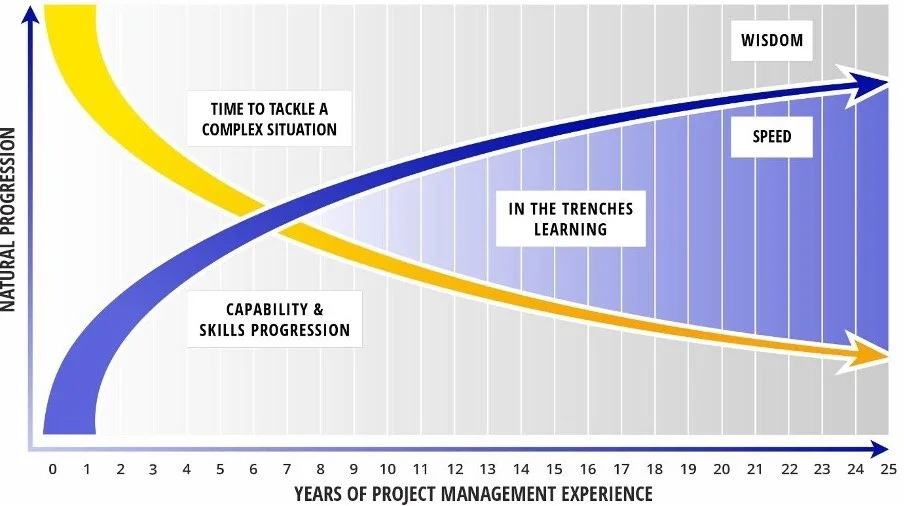
The process of progression along the 25-year learning curve is a process of knowledge and capability accumulation. I always assimilate high-tech know-how accumulation as gold.

25-year accumulation of high-tech breakthroughs and know-how
The question is, how do we transfer the accumulated know-how to other project managers in the fastest and most efficient way possible?
Advanced Training & Capability Building
How do we compress a 25-year learning curve into say a 2 to 3-year timespan? That is the challenge. Can we effectively get through the learning curve at warp speed?
Typical high-tech projects can influence $10 millions and sometimes $100 millions in sales. I worked on one IC project, which had a projected near-term sales forecast of Euro 1.5 billion. There are very strong economic reasons for wanting to upskill experienced project managers at speed. The speed of capability building challenge has been a question of continuous examination and rapid evolution over the past couple of decades.
In order to support progressive and strategic (prioritised) learning, various structured frameworks were developed. One such model was the Skills Ladder:
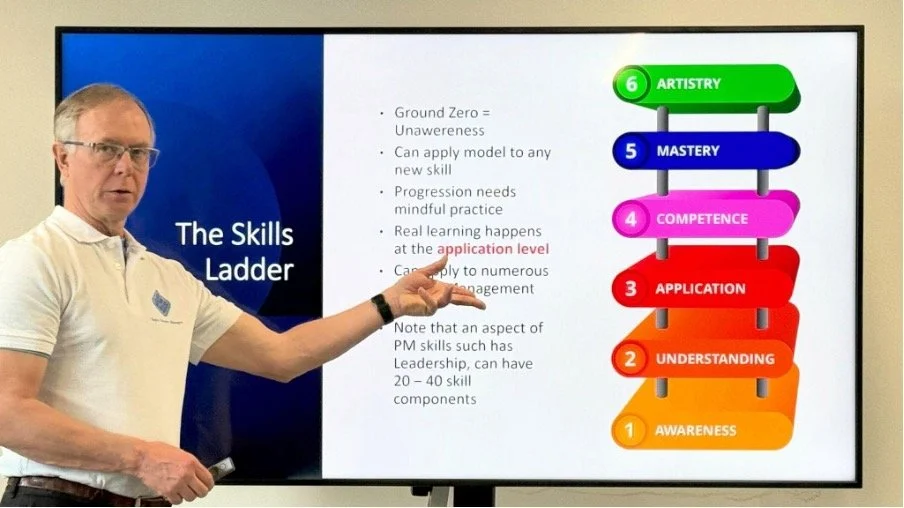
This is a progressive learning framework. When it comes down to new principles, models and approaches, the Awareness and Understanding skills levels are a necessity. However, it has always been stressed that it is the Applications level where the real learning takes place.
In our workshop series, we introduced the SCARL framework to work through practical high-tech project challenges — not as abstract theory, but as structured diagnosis and discussion.
S = Situation.
C = Challenge.
A = Action.
R = Result.
L = Lessons learned.
The aim is simple: to help project managers see project problems earlier, understand what level the challenge is really operating at, and choose a better response before pressure turns into rework, delay, or confusion.
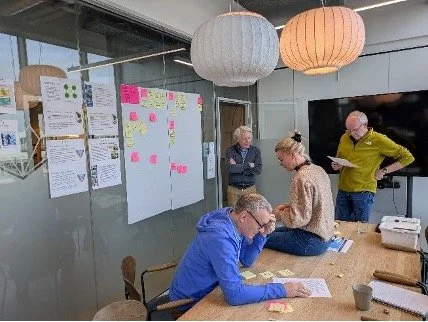
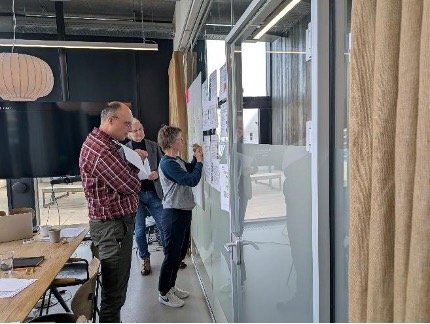
The SCARL framework can be used in two modes:
Project managers can share their own historical case studies with colleagues
The framework can be used as a workshop challenge, to be worked on by a group of 3 to 4 project managers. Here the situation and challenge are set.
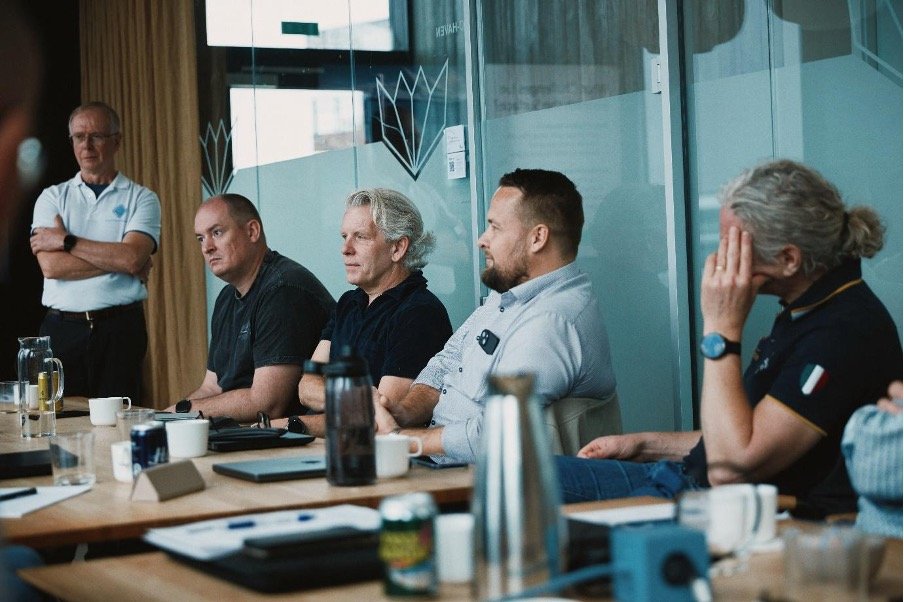
In both cases, workshop attendees get closer to the Applications Level - where the real learning starts. We have compiled numerous case studies, which can be shared. In terms of workshop challenge exercises, we reflect challenging project situations. In small groups they have been asked to take a high-level description of a project challenge, then to set a course of action to flesh out the analysis. Then they have set an action plan as to how to solve that particular situation. The challenges set are reasonably complex, combining problems from different organisational issues. The PMs are asked to formulate an action plan relatively quickly.
The exercises naturally promote much discussion within the working groups. This is a good platform for learning and a useful situation to practice “constructive debate”, a key philosophy we teach.
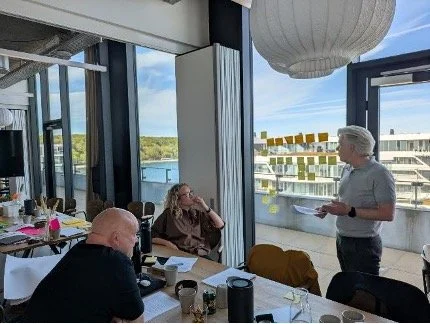
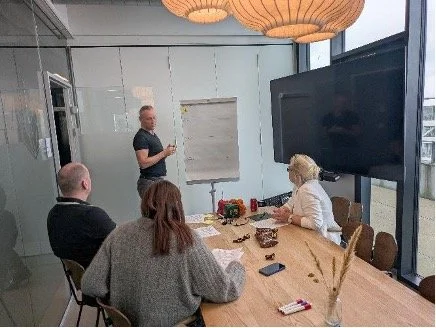
As well as an action plan, the SCARL exercises finish with a Lessons Learned section. These are general observations on common failure modes, how to overcome them and how to avoid them in the first place.
The exchange of perspectives and viewpoints is crucial to the learning process. Each team appoints a spokesperson to present their team’s findings and conclusions, as if they were presenting to an executive team. Probing and challenging questions are posed.
We use the SCARL case study technique in order to accelerate the application of new approaches to typical project scenarios.
In order to offload a significant proportion of new concepts and material for the workshops, we now supply significant overview and learning material before the workshop. This is done to allow us more time to apply new concepts and approaches during the workshop.
So far, we have run 7 workshops. All have been well attended and are very interactive. After each workshop, we have planned the next workshop based on the demands of the course attendees. They are all dealing with complex challenges on a daily and weekly basis. As we speak, the definition of requirement continues to evolve.
In order to support the themes of each workshop, numerous articles have been written on relevant topics. These articles help reinforce the learning and application process.
Conclusion
The need for high-performance high-tech project managers is great. Speed of execution and effective benefits management are both critical.
The advanced project management learning curve is extremely long. We know from experience that the learning curve is at least 25 years in duration. The incentive to accelerate that learning process is huge because the business payback is substantial.