Turning scope into strategy: The role of SoW, diagnosis, and uncertainty management

In complex, high-tech environments, even well-defined project plans can crumble under real-world pressure. The root cause? A shallow understanding of scope and uncertainty—dand a failure to translate them into actionable strategy.
To lead projects that deliver not only on paper but in reality, great PMs do more than define scope. They build their execution plan around what’s real, what’s missing, and what might change.
Velocity-aligned PMs use a three-part formula to do this well: a meaningful Statement of Work (SoW), structured project diagnosis, and a living uncertainty register. The latter two items are entirely unique, but invaluable if applied correctly.
Scope of work is more than a contract deliverable
Too often, a Statement of Work is treated as a contract appendix—written once, filed away, and revisited only when things go wrong.
But in high-performance project management, the SoW becomes the foundation of strategic alignment. It should define far more than the commercial agreement or customer-facing deliverables.
It should capture:
External deliverables (as expected by the customer or partner)
Internal deliverables that drive execution quality, including:
Design documents and drawings
Technical reviews and checklists
Test plans and reports
Compliance and safety documentation
Project quality reports
Gate or milestone sign-off forms
Configuration baselines
Release approvals
This level of clarity protects against two major risks:
Delivering “on time” but missing critical internal work—leading to technical debt, rework, failed integration or an unmaintainable design.
Cross-functional confusion around responsibilities, timelines, dependencies and what “done” actually means.
A good SoW doesn't just define what to deliver. It frames how the team will succeed—and where to pay attention early.
Diagnose before you strategize, plan, and deliver
High-pressure timelines often push PMs to jump straight into planning. But strategic project managers slow down—briefly—to diagnose first.
Diagnosis is about understanding the real starting point. It's the moment to ask:
Has the system architecture been defined and reviewed?
Are all requirements captured and validated?
Are internal deliverables listed, or is the SoW purely contractual?
Are suppliers aligned and interfaces confirmed?
Is the work breakdown realistic, or based on assumptions?
Are there organizational deficiencies?
Are stakeholders aligned?
Are key assumptions clearly stated?
Have feasibility checks been defined and undertaken?
Does development sequencing reflect risk and uncertainty?
This diagnostic phase is both a defensive and an offensive tool. It prevents unrealistic planning and allows PMs to detect invisible friction before it shows up as delay.
Without diagnosis, the project plan is just a hypothesis. Impediments and risk are hidden from view.
With diagnosis, it enables a robust winning strategy.
The PM’s secret weapon: the “uncertainty register”
Every project has risks—but not all risks are the same. The real challenge isn’t identifying obvious project threats. It’s surfacing the uncertainties hiding in grey areas of the design, collaboration, or customer requirements. This is where the uncertainty register comes in.
A well-run uncertainty register helps teams track:
What is still unclear?
What assumptions are we making?
Which technologies or capabilities are unproven?
What decisions are pending, and by when?
Are new suppliers familiar?
Are dependencies understood?
Are new CAE tools or tool versions being introduced?
Will the architecture satisfy the user requirements?
Are we introducing new compliance standards?
Will the product work under all corner conditions and operating ranges?
Which variables could affect design, cost, or integration later?
Unlike a traditional risk register, which tracks known threats, the uncertainty register:
Lives alongside the project plan—not as a side file
Evolves weekly as clarity improves
Drives strategic reviews of scope, feasibility, and resource alignment
When collective uncertainty is high, often at the beginning stage of a project, the proficient PM should reduce uncertainty systematically and as swiftly as possible.
Velocity-trained PMs use it to prevent surprises, force cross-functional dialogue, and steer discussions toward the most dynamic parts of the project. They particularly reduce uncertainty and risk during project set-up, or the “Project Planning & Evaluation Phase”.
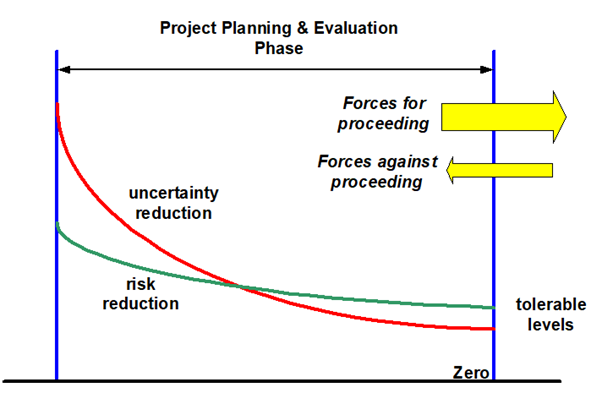
Because uncertainty, left unmanaged, always converts into cost and delay.
Conclusion
Project success doesn’t start with Gantt charts or Jira boards. It starts with how you define, dissect, and challenge the scope. When PMs elevate the SoW from a contract checklist to a strategic tool, run diagnosis before they plan, and manage uncertainty with discipline, they don’t just survive complexity—they control it. And in high-tech delivery, that control is what separates firefighting from pure project flow.
Need the Super Project Manager Ebook?
See: https://high-techprojectmanagement.com/ebook/