Communication Superskills for High-Tech Leaders
We all “know” that communication skills are important, right? Especially, in complex, fast-moving and pressurised high-tech companies? We can’t achieve anything without close collaboration and tapping into the expertise and resource capacity potentially available to us. Conversely, with collaboration and with synergy we can achieve immense things.
However, I put it to you that we do not appreciate two things:
Just how extensive the communication skills field is
Really how important effective communication is to efficiency, effectiveness and ultimately to business success
The Skills Training Gap for Experienced Leaders
In this article we consider two groups of people within high-tech companies – business leaders and project managers. They have similar skillset demands, and those demands are high. But to what extent are we taught a spectrum of communication skills? The answer is, very little indeed. If we take project managers, for instance, basic training introduces to some communication theory and Communications Management. It does not teach us about:
Crafting a powerful message
Human psychology and diversity
Team motivation and dynamics
Barriers to communication and how to overcome them
Conflict resolution
Constructive debate
Communication barriers
Navigating a political landscape
Negotiation
Etc., etc.
Yet, we need all those skills to be successful in our job. It seems that above a basic understanding and training, there is a substantial headroom for communication skills learning. I use the term, “Communication Superskills”, because these skills are over and above what we normally are taught. Additionally, such skills can give you great efficiency, effectiveness and impact. Having advanced communication skills is like a superpower. It gives you tremendous leverage.
On 14th March, 2026 we ran a Campus workshop in Communication Skills for 7 experienced Escape Company project professionals in Aarhus. Their experience level was between 10 and 30 years in project management. This was part of a series of advanced and applied project management workshops. The aim was to open a gateway to the next level with communication skills and to be enable them to apply those skills to complex project situations.
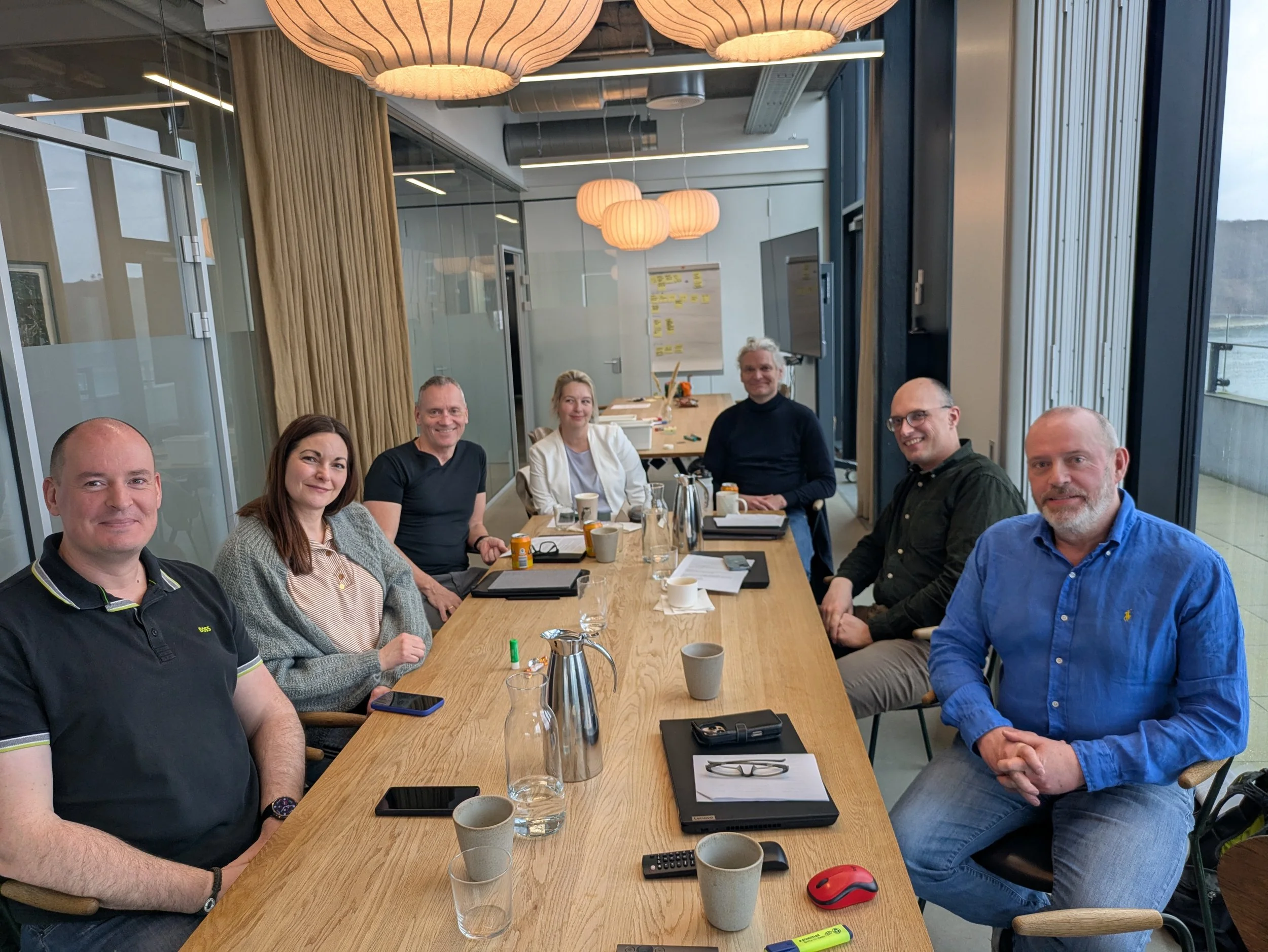
In the workshop we covered four primary areas:
The importance and application of effective communication
Communication barriers
Excellent communication skills for normal situations
Advanced communication skills for contentious situations
In this article, let’s just look at the first elements – the importance and the application. Further, educational articles will follow.
Importance of Effective Communication
By 1990 it was universally very well recognised that communication was important for project management success. By 2000, I realised that it was actually very important. Moving on to 2010, I realised that it was actually vital. Reaching 2020, I knew that it was “dynamite”, that is, you could use effective communication to not only solve critical project problems, but to transform the way that people and organisations think. In other words, my realisation of the importance level simply grew and grew. I only wish that someone had told me that 30 years ago. I wish that someone had taught me about common communication barriers and how to master the skills of navigating challenging situations.

I owe most of my skill and know-how of communications skills to Toastmasters International, https://www.toastmasters.org . TMI is organised in a similar way to PMI. TMI was founded over 100 years ago and have developed a highly optimised system for teaching members of Toastmaster speaking clubs public speaking skills and communication skills, in general. I have been a member of great Oxford Speakers Club since 2003. I have served two terms as President of Oxford Speakers Club and initiated the club mentoring scheme in 2007. If you are truly committed to mastering communication skills, there are speaking clubs around the globe and probably one near you. See https://www.toastmasters.org/find-a-club . There are over 140,000 clubs globally, spread over 150 countries.
What I noticed over the past 23 years is that as my communication skills developed, so did my effectiveness as a project management and a business influencer. The ability to construct and articulate a meaningful and sometimes powerful message can change minds. Crucially, you “sound like a leader”. People are more easily persuaded by you when you sound like a leader. Another observation is that training in speaking skills (to an audience) spills over into all other forms of communication, including email, one-to-one meetings and running or participating in online meetings. I think that has to do with the following foundational skills:
The ability to focus on one key message
Being structured
Being articulate
Being succinct
Being confident
The ability to consider your audience – empathy
Knowing how to create impact
Asking thought-provoking questions
My own communication skills learning curve is about 25 years, powered by a burning desire to improve and to extract the benefits. The payback has been extremely rewarding.
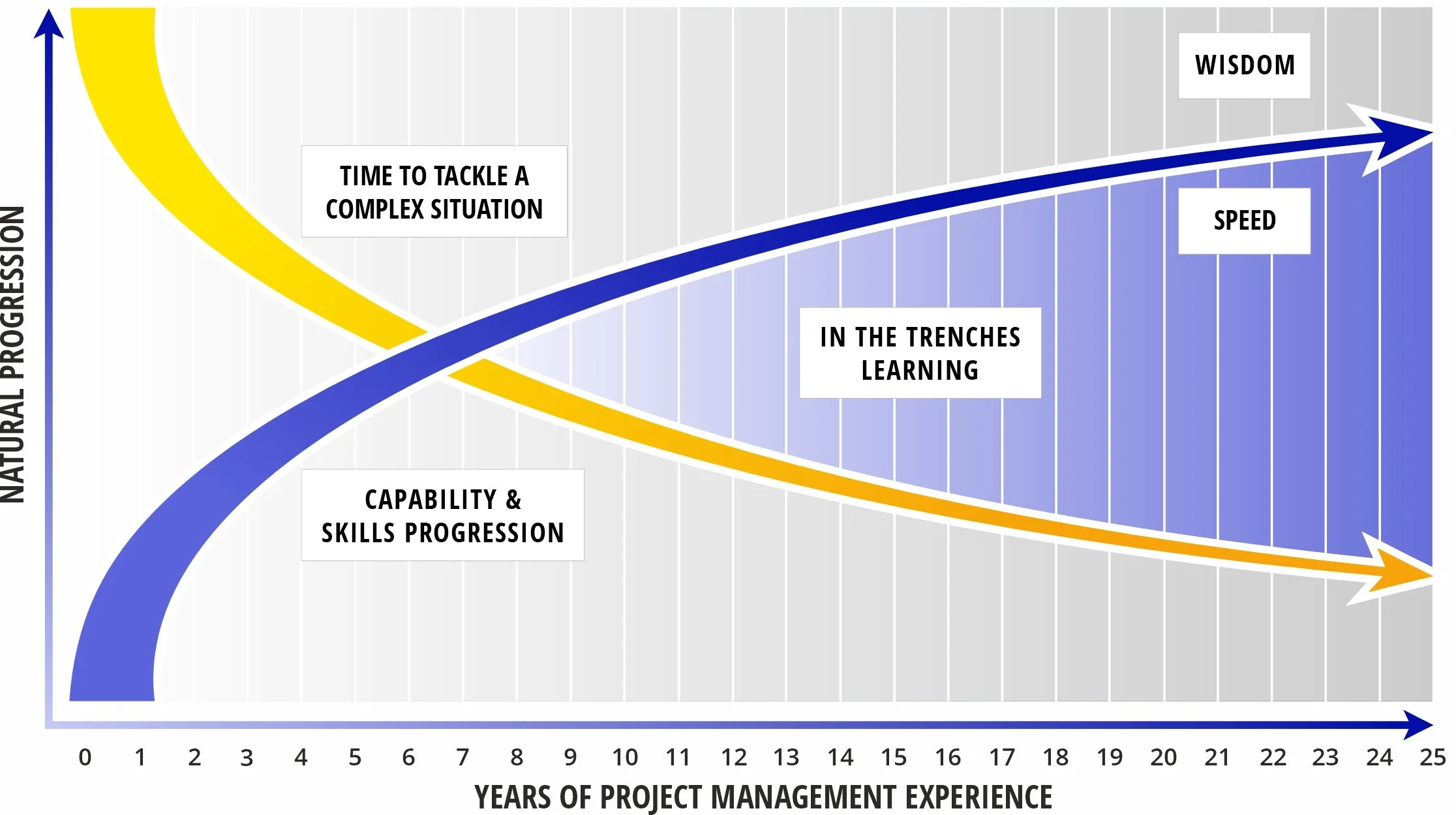
My aim, as with other critical skills, is to get business leaders and project managers down the learning curve 10 time to 100 times faster than normal experiential learning. That can be achieved through education, training and coaching.
Some key observations I have made during my career, is that all great leaders are great communicators, and conversely great communicators make great leaders. The two seem to go hand in hand.

The big issue is that within high-tech companies virtually everything is achieved through collaboration and the motivation to work together on agreed goals. Effective communication is therefore the life blood of a successful high-tech company. As an individual, what communication skills give you is tremendous leverage – leverage to solve problems and to make improvements.
Applications of Effective Communication
We frequently underestimate the number of diverse ways that effective communication can be applied. This is almost certainly a missed opportunity, because communication is the medium through which effective leadership is realised. The most effective way of improving communication skills is to be mindful of how communication can be used to advantage, and then to conduct communication in a mindful way.
Let’s look at some basic ways that communication can be applied:
To form new relationships or to consolidate relationships
To enquire and then to understand
To influence
To confirm or clarify
To inform or brief
To report
To follow-up on an action
To coordinate between different parties
To align
To keep in touch
To support
To present an idea or improvement
To encourage and enthuse
To investigate an issue or a status
These are the basic building blocks or elements of communication. Often these can be combined to form more complex skill combinations:
Shaping team behaviour towards desired performance levels
Identifying and removing short-term impediments
Building rapport and relationships to a deeper level
To brainstorm a solution to a complex technical or organisational problem
Clarification of what is required, by whom and why?
Tracking progress towards near-term milestones
Effective coordination on more complex tasks
Eliciting viewpoints on deep technical issues
Effective risk management for previously identified risks
Keeping both the team and management up to date with progress and issues
Showing appreciation for work well done - thanking
Pushing continuous improvement
Conducting a change management programme
Negotiating resources and action plans
These more complex skills normally need some sort of protracted dialogue or discussion.
Conclusion
In this article we have looked at the significant gap is communication skills training, emphasising the importance and benefits that can be gained from advanced and more in-depth training.
We have briefly looked at the application of communication skills both at the elemental and compound skill levels.
In forthcoming articles we will also look into:
Communication barriers and how to overcome them
Excellent communication skills for normal situations
Advanced communication skills for contentious situations
Should you need a broader understanding of super communications skills, then I will include some more article links in the comments below this article.